Things to Do in Buenos Aires: A Local’s Guide for Every Kind of Trip
Oct 19, 2026 · @loomi.fun
Here is the first thing nobody tells you about Buenos Aires: the city runs on a later clock. You can have dinner at 7pm, but the restaurant will still be filling up around you at 8:30 or 9. Bars get going around 11pm, techno parties start at midnight, the big clubs at 2am, and on Sunday half the city is at a street market.
Get the rhythm right and Buenos Aires is one of the easiest big cities in the world to love. Get it wrong and you’ll spend your trip in empty bars and closed shops.
This guide is built to be useful, not long. Start by picking the kind of trip you want, read the five rules of how the city works, then go straight to the plans that fit you. Every section tells you what’s worth it, how long to give it, what it costs and when to go.
Prices checked in October 2026. Argentina has high inflation, so peso prices go up often; the dollar figures are a better guide.
Pick your trip
- First time here and want the classics? Go to The essentials.
- Here to eat? Go to Eat and drink like a porteño.
- Want to go out and party? Go to Nights out.
- Came for tango? Go to Tango: show or milonga.
- Want to see a football match? Go to Football.
- Into art, museums and free culture? Go to Culture, mostly cheap or free.
- Been before, or hate tourist traps? Go to Off the tourist circuit and What to skip.
- Only have a few days? Go to Itineraries.
- Want to meet locals? Read our one recommendation.
How Buenos Aires works: 5 rules that will save your trip
1. Everything happens later than you think. Lunch is 1 to 3pm. Restaurants fill up from about 8:30pm and the busiest dinner hour is 9 to 10pm (at home, people often eat even later). Bars open from 8pm but get lively around 11pm or midnight. Techno and electronic parties usually start around midnight, and the big clubs (boliches) get going at 2am and close at 6 or 7am. Plan your days to start late too: very little is open or lively at 8am.
2. There’s a meal you don’t have at home: the merienda. Between 5 and 7pm, porteños have coffee with medialunas (small, sweet croissants) or a slice of cake. It’s what keeps you going until a 9 or 10pm dinner. Do it in a historic café and it’s also sightseeing.
3. Sunday is market day, Monday is closed day. On Sunday the San Telmo street fair takes over Defensa street and the Mataderos fair runs in the west of the city. Many museums and parks close on Monday (the Bellas Artes museum, the Rosedal rose garden and the Costanera Sur nature reserve, among others), so check before you build a Monday around one.
4. Pay with a foreign card, keep some pesos in cash. Since currency controls were lifted in 2025, a foreign Visa or Mastercard gets a fair exchange rate, so the card is now the easiest way to pay. Always choose to be charged in pesos (ARS), never in dollars. Carry some cash pesos anyway: tips, market stalls and small shops often only take cash.
5. People greet with a kiss, and they talk to you. One kiss on the right cheek is the normal greeting, even between men who’ve just met, though nobody expects it from a tourist. Porteños are chatty and direct, and asking a waiter or a kiosk owner for a recommendation usually gets you a passionate answer. If someone offers you mate (the shared herbal tea), sip it all and hand it back; say “gracias” only when you don’t want any more.
If we could recommend only one thing
This one is personal. If you take a single piece of advice from this guide, make it this: as soon as you arrive, go out and meet people. Whether you travel alone, as a couple or with friends.
Argentina has football, asado, wild nights, Nobel Prize winners, wine, snow in the south and deserts in the north. But what really makes this country is its culture of friendship. Porteños are the ones who will show you the real Buenos Aires. Without them you’ll take home a great picture of the city without ever getting to know its heart.
So talk to people. Say yes when someone invites you to an asado, a dinner or a night out. If you don’t know where to start, book a tour or go to a language exchange, a group dinner or a meetup. And if you still don’t know how, write to us at @loomi.fun and we’ll help you. We don’t sell tours or travel services. It’s simply what we most want for you: to get to know the local culture for real.
The essentials: worth it or not?
These are the places every first-timer asks about, with an honest verdict.
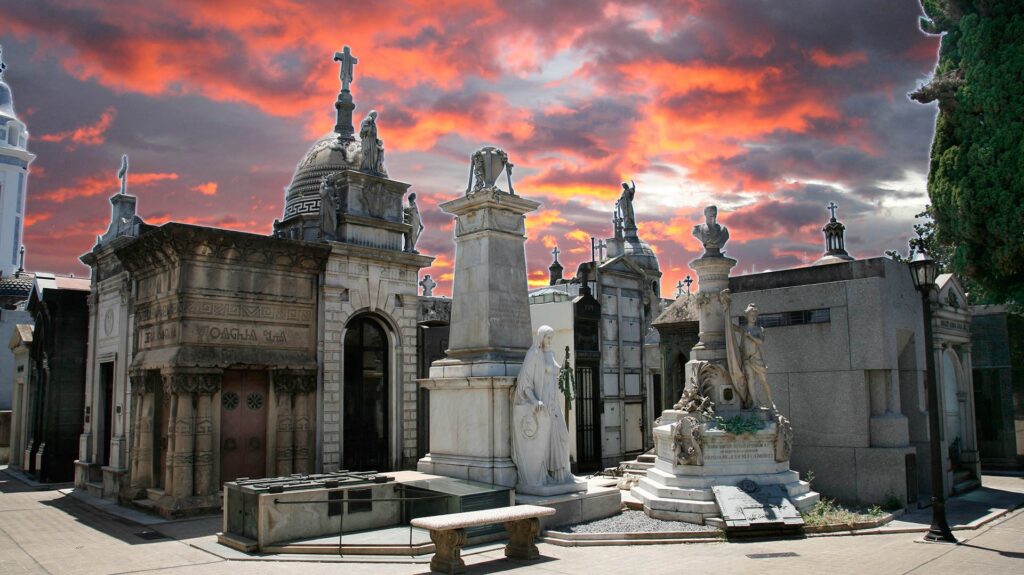
Recoleta Cemetery
Verdict: worth it, give it 1.5 hours. A city of marble mausoleums where Eva Perón is buried. It sounds morbid and it’s one of the most beautiful places in the city.
- Where: Junín 1760, Recoleta.
- When: Open daily. The city lists 8am to 6pm; some sources say 9am to 5pm, so arrive before 4:30pm to be safe.
- Cost: About US$16 (ARS 24,000 to 25,400) for foreigners. Argentine residents enter free. Card only, no cash.
- Tip: Buy your ticket online on the city’s official ticket site (EntradasBA) and it’s valid any day that month. The city runs free guided tours in Spanish (Tuesday to Friday at 11am and 2pm, weekends at 11am and 3pm). Evita’s tomb is under her family name, Duarte; follow the crowd or ask a guard.
San Telmo and its Sunday fair
Verdict: unmissable on a Sunday, give it half a day. The oldest neighborhood in the city, with cobblestones, antique shops and tango dancers in the street.
- Where: Along Defensa street, centered on Plaza Dorrego (Defensa and Humberto Primo).
- When: The fair runs on Sundays, roughly 10am to 5pm. The Mercado de San Telmo (food market and antiques) is open daily.
- Cost: Free to walk around.
- Tip: Start at the Plaza de Mayo end and walk south toward Plaza Dorrego. Bring small peso notes, because many stalls only take cash. It gets crowded, so keep your phone in your front pocket.
La Boca and Caminito
Verdict: worth 1 to 2 hours in daylight, not more. The colorful houses of Caminito are the postcard of Buenos Aires. They’re also very touristy, and the streets around them are not a place to wander.
- Where: Caminito street and the few blocks around it (Del Valle Iberlucea and Magallanes).
- When: Daytime only.
- Cost: Free. The Boca Juniors museum and stadium tour at La Bombonera runs about US$25 to 35.
- Tip: Take a taxi or app ride there and back instead of walking from San Telmo. Stay in the Caminito area. Fundación Proa, a contemporary art museum facing the river, is the best thing in La Boca that most visitors miss.
Teatro Colón
Verdict: worth it, even if you don’t like opera. One of the great opera houses of the world, with acoustics that are routinely ranked among the best anywhere.
- Where: Tour entrance at Tucumán 1171, downtown.
- When: Guided tours daily, every 15 minutes from 10am to 4:45pm, about 50 minutes. Tours in English at 11am, 12pm, 1pm and 3pm.
- Cost: ARS 34,000 (about US$22) for visitors.
- Tip: Book on the theater’s website. If you’d rather hear the place than walk through it, standing tickets in the top gallery (paraíso) for a performance can cost less than the tour.
Plaza de Mayo and the Casa Rosada
Verdict: worth 1 hour, more if you get into the Casa Rosada. The square where Argentine history happened, with the pink presidential palace on one side.
- Where: Plaza de Mayo, downtown.
- When: The square is always open. The Casa Rosada offers free guided tours on weekends and holidays.
- Cost: Free.
- Tip: Book the Casa Rosada tour online on casarosada.gob.ar in advance with your passport number, and bring that same passport. On Thursday afternoons the Mothers of Plaza de Mayo still walk around the square, a moving thing to see.
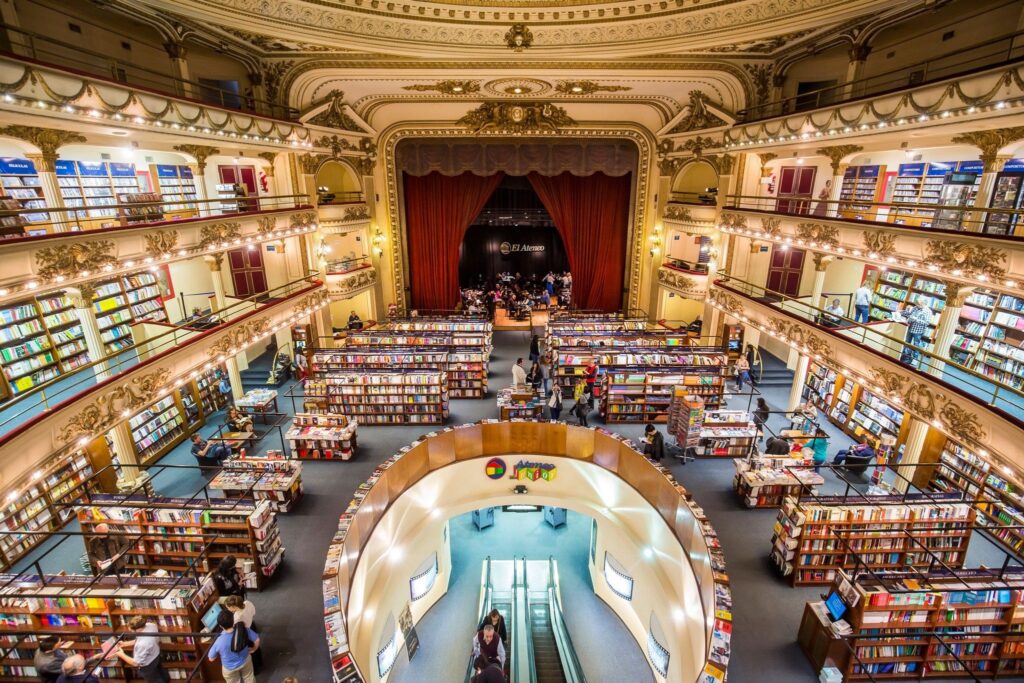
El Ateneo Grand Splendid
Verdict: worth 20 minutes. A 1919 theater turned into a bookshop, regularly named one of the most beautiful in the world.
- Where: Av. Santa Fe 1860, Recoleta/Barrio Norte.
- When: Monday to Saturday 9am to 9pm, Sunday 11am to 9pm.
- Cost: Free to enter.
- Tip: Combine it with Recoleta Cemetery, a 15-minute walk away.
Palermo: parks, gardens and the Floralis
Verdict: worth half a day, ideal on a sunny afternoon. Palermo is the city’s big green lung and its trendiest neighborhood.
- What: The Bosques de Palermo and the Rosedal rose garden (free, closed Mondays), the Japanese Garden (about US$16 for non-residents, open even in the rain) and the Floralis Genérica, the giant steel flower on Av. Figueroa Alcorta.
- Tip: Do the parks by day, then walk to Palermo Soho for coffee, shops and dinner.
Costanera Sur Ecological Reserve
Verdict: worth 2 hours if you want nature without leaving the city. A wild wetland right behind the towers of Puerto Madero, with birds and trails along the river.
- Where: Main entrance at Av. Tristán Achával Rodríguez 1550.
- When: Tuesday to Sunday 9am to 6pm, last entry 5:15pm. Closed Mondays and after heavy rain.
- Cost: Free.
- Tip: Finish at the food stands along the Costanera for a choripán (chorizo sandwich), especially on weekends.
Eat and drink like a porteño
Food is reason enough to come here. Where to start, by craving:
Parrillas (steakhouses). Order bife de chorizo (sirloin) or ojo de bife (ribeye), a provoleta (grilled cheese) and a Malbec. Say how you want it: jugoso is medium-rare, a punto is medium.
- Don Julio (Guatemala 4691, Palermo): the most famous steakhouse in the country and one of the top-rated restaurants in the world. Expensive, and you need to book well ahead.
- La Cabrera (José A. Cabrera 5099, Palermo): big portions and a classic for visitors.
- El Desnivel (Defensa 855, San Telmo): a no-frills, good-value parrilla, perfect after the Sunday fair.
- Parrilla Peña (Rodríguez Peña 682, Centro): old-school, honest prices, near Teatro Colón.
- El Ferroviario (Reservistas Argentinos 219, Liniers): far from the center and absolutely local, with giant portions. Go with friends and an appetite.
Bodegones (old-school neighborhood restaurants). Milanesas, homemade pasta and huge portions meant for sharing. This is how porteños actually eat.
- El Preferido de Palermo (Jorge Luis Borges 2108, Palermo): a restored old bodegón from the Don Julio team.
- Los Galgos (Av. Callao 501, Balvanera): a 1930s bar reborn, great for lunch, vermouth or dinner.
- El Obrero (Agustín R. Caffarena 64, La Boca): a legendary bodegón full of football memorabilia. Take a taxi there at night.
- Club Eros (Uriarte 1609, Palermo): a social club dining room with some of the cheapest good food in Palermo.
Pizza, Buenos Aires style. Thick, cheesy and often eaten standing at the counter. Avenida Corrientes is its home: Güerrín (Corrientes 1368), Las Cuartetas (Corrientes 838) and Banchero (Corrientes 1300), plus El Cuartito (Talcahuano 937), with walls covered in boxing and football history. Order a fugazzeta (onion and cheese) and a slice of fainá (chickpea flatbread) on top.
Empanadas. El Sanjuanino (Posadas 1515, Recoleta, near the cemetery), La Cocina (Av. Pueyrredón 1508, Recoleta) and El Hornero (inside the Mercado de San Telmo).
Ice cream. Buenos Aires has an Italian-style helado culture and porteños take it seriously. Cadore (Av. Corrientes 1695) is the classic; chains like Rapanui, Lucciano’s and Freddo are all over the city and very good. Order dulce de leche and sambayón.
Merienda in a historic café. Las Violetas (Av. Rivadavia 3899, Almagro) for the stained glass and huge merienda platters; Café Tortoni (Av. de Mayo 825), the most famous (expect a queue); La Biela (Av. Quintana 596), next to Recoleta Cemetery; Bar El Federal (Carlos Calvo 599) and Bar Británico (Defensa 399) in San Telmo; and Confitería La Ideal (Suipacha 384) downtown.
Remember the timing: restaurants are busiest from 9 to 10pm, so book ahead for that slot, and tip about 10% in cash, even if you pay the bill by card.
Nights out
If you’re coming for the nightlife, the key is pacing. A typical night out goes like this:
- Dinner at 9 or 10pm.
- Bars from 11pm or midnight. They open earlier, around 8pm, but that’s when they come alive. Palermo has the highest concentration of bars, cocktail spots and speakeasies.
- Parties from midnight, clubs (boliches) from 2am until 6 or 7am. Techno and electronic parties usually start around midnight; the big clubs fill up after 2am.
Bars to start with:
- Tres Monos (Guatemala 4899, Palermo) and Victor Audio Bar (Soler 5130, Palermo): both on the 2026 World’s 50 Best Bars list.
- Florería Atlántico (Arroyo 872, Retiro): a cocktail bar hidden behind a flower shop.
- Uptown (Arévalo 2030, Palermo Hollywood): a speakeasy you enter through a fake New York subway car.
- CoChinChina (Armenia 1540, Palermo): Asian-inspired cocktails, one of the city’s most awarded bars.
- Gibraltar (Perú 895, San Telmo): a relaxed pub, good for a first beer in San Telmo.
Dancing: Crobar (Paseo de la Infanta, Palermo) is the big classic club and is on DJ Mag’s 2026 list of the world’s top clubs. Under Club (Niceto Vega 5699, Palermo) is the reference for techno, roughly midnight to 7am. Niceto Club (Niceto Vega 5510) hosts parties like Club 69. Check Instagram for who’s playing and buy tickets online.
Locals often warm up with a previa (drinks at someone’s home) before going out, so places get busy later than you’d expect. Bring ID to clubs, and use a taxi or ride app to get home.
Tango: show or milonga?
This is the most important decision for tango fans, and most tourists don’t know there’s a choice.
A tango show is a polished stage performance, usually with dinner. It’s spectacular, and it’s made for visitors.
- Cost: About US$50 to 165 per person, depending on the venue and whether dinner is included. Well-known shows include El Querandí, Café de los Angelitos and Señor Tango, with Rojo Tango at the luxury end.
A milonga is where people actually go to dance tango socially. It’s not a show, but you can watch, have a drink and take a class.
- How it works: Many milongas start with a group class for beginners (often around 8pm), then the dancing runs from about 11pm to 4am.
- Cost: About US$3 to 12 at the door.
- Where to start: La Catedral (bohemian, no dress code) and La Viruta (beginner-friendly classes) are the easiest for a first timer.
- Free: On weekends, couples dance at La Glorieta in Barrancas de Belgrano (11 de Septiembre and Echeverría), an open-air bandstand milonga that’s free, with a class beforehand (pass the hat). It starts in the early evening; check the time on hoy-milonga.com, which lists every milonga in the city day by day.
Our advice: If you have only one night, a milonga is the more authentic experience and costs a fraction of a show. If you want the glamour, book the show. Both are worth it.
Football: how to actually get in
Watching a match is one of the most intense things you can do in Buenos Aires. Getting a ticket is the hard part.
- Boca Juniors: Tickets for league games are, in practice, only for club members, and the members’ waiting list takes years. Tourists go through operators that sell hosted match packages, from about US$150, with transport and entry included.
- River Plate: Sells first to members and then sometimes to the general public on its website, which requires registration. Entry now uses facial recognition. A hosted package is the practical option for most visitors.
- Be careful who you buy from. Fake tickets and cloned member cards are common, and the riskiest option is a stranger selling online. Check reviews, ask a local, or write to us at @loomi.fun and we’ll tell you what we know.
- Cheaper and easier: Smaller clubs like Vélez Sarsfield or Argentinos Juniors often sell tickets at the stadium on match day. The atmosphere is still great.
- No match during your trip? The Boca Juniors museum and Bombonera tour and the River Plate museum and Monumental tour are open most days, except on and near match days.
Culture, mostly cheap or free
- Museo Nacional de Bellas Artes: Free. The best collection of Argentine art, plus European masters. Tuesday to Sunday.
- MALBA: About US$9, half price on Wednesdays. Latin American art, including Frida Kahlo’s Self-portrait with Monkey and Parrot. Closed Tuesdays.
- Free walking tours: Tip-based tours of downtown and Recoleta leave Monday to Saturday (for example, Buenos Aires Free Walks). Good for your first day.
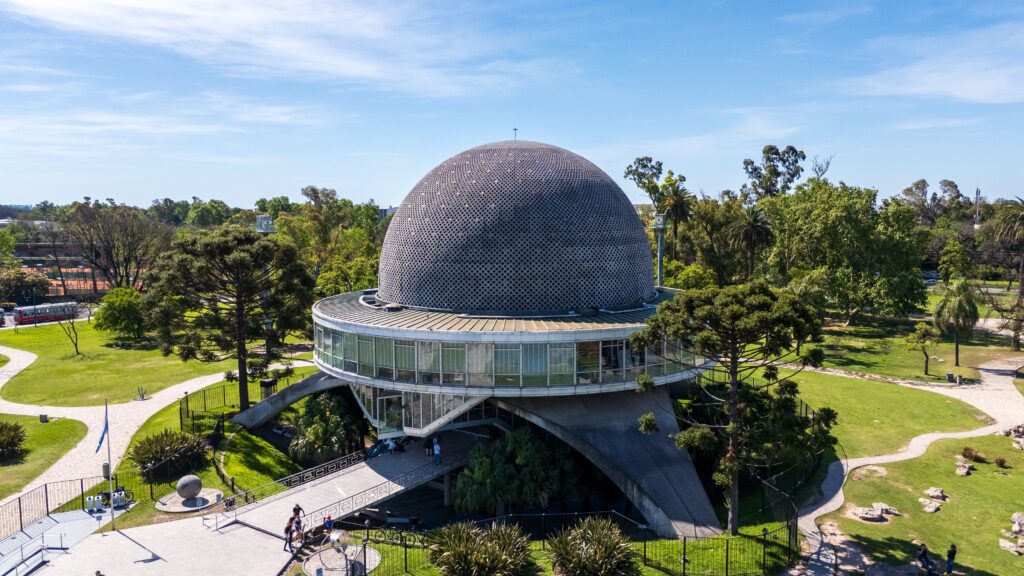
- Planetario Galileo Galilei: About US$8 for a dome show (tickets online only, they sell out). The building alone, a 1960s UFO in a park, is worth a look.
- Palacio Barolo: A 1923 office building designed around Dante’s Divine Comedy, with views from its lighthouse. Guided tours only, booked in advance; the night tour is the most popular.
- Museo Evita: About US$7. The best place to understand why Eva Perón still divides Argentines.
Off the tourist circuit
For second-timers or anyone who wants to see how the city really lives:
- Feria de Mataderos: A gaucho fair on the western edge of the city, with up to 700 stalls, regional food like locro and empanadas, folk dancing and horse-riding games. Sundays and holidays, 11am to 8pm, April to December. It’s far (about 30 to 45 minutes by taxi), and that’s the point: you’ll hear more Spanish than English.
- A football match at a small club (see above).
- A milonga on a weeknight, when it’s mostly locals.
- Barrio Chino in Belgrano for a weekend food walk, and Villa Crespo or Chacarita for neighborhood cafés and bars where tourists rarely go.
What to skip (or do differently)
- Florida street. A busy pedestrian street full of money changers shouting “cambio”. You don’t need them anymore (your card gets a fair rate), and it’s a known spot for pickpockets.
- Changing all your money at the airport. The gap with the city has narrowed a lot since 2024 and it’s now only slightly worse, but there’s no reason to change more than you need for the first day.
- Walking around La Boca beyond Caminito, and walking at night in Constitución or around the Retiro bus terminal.
- Going to bars at 8pm and leaving at 10. That’s when they’re just warming up. Stay until midnight.
- Restaurants with picture menus and hosts on Caminito or Puerto Madero. Walk ten minutes and pay half.
- Doing everything downtown. The center (Microcentro) empties at night and on weekends. Stay and spend evenings in Palermo, Recoleta or San Telmo instead.
Itineraries: 1, 3 and 5 days
One day
Morning in Recoleta (cemetery and El Ateneo), lunch, then Plaza de Mayo and Av. de Mayo with a coffee at Café Tortoni. Afternoon in San Telmo. Dinner at a parrilla at 9pm, then a milonga.
Three days
- Day 1, the classic center: Free walking tour, Plaza de Mayo and Casa Rosada, Teatro Colón tour, merienda at a notable café, dinner at a bodegón.
- Day 2, Recoleta and Palermo: Recoleta Cemetery and El Ateneo in the morning, Bellas Artes or MALBA, Palermo parks in the afternoon, Palermo Soho at night (dinner at 9 or 10pm, then bars).
- Day 3, the south: San Telmo (ideally a Sunday, for the fair), La Boca and Caminito by day, Costanera Sur Reserve if there’s time, tango at night.
Three days is enough to see the essentials and get the rhythm of the city. If you can, make one of them a Sunday.
Five days
Add a football match or a stadium tour, a full day trip (see below), and an evening in a neighborhood off the circuit like Villa Crespo or Chacarita.
Which neighborhood is for what
- Palermo: Restaurants, bars, nightlife, parks. The most popular base for visitors.
- Recoleta: Elegant, safe, central, museums. Quieter at night.
- San Telmo: History, antiques, tango, Sunday fair. Atmospheric but a bit rougher at night.
- Microcentro and Monserrat: Historic sights and Av. de Mayo. Busy by day, empty at night.
- Puerto Madero: Modern, safe, riverfront, expensive restaurants.
- La Boca: Caminito and La Bombonera. Visit by day, don’t stay here.
Day trips from Buenos Aires
- Tigre and the Paraná Delta: Train from Retiro (Mitre line, Tigre branch) for under US$1, about an hour. Boat rides through the delta islands and a big riverside market.
- Colonia del Sacramento, Uruguay: A UNESCO World Heritage old town across the river. Ferries take about 1 to 1.25 hours and cost roughly US$60 or more each way. Bring your passport.
- San Antonio de Areco: The traditional gaucho town, about 2 hours by bus from Retiro. Best for an estancia day with horses and asado.
Before you go: money, transport and safety
The short version:
- Money: Pay by foreign card in pesos, bring some clean US$100 bills as backup, and avoid ATMs (high fees, low limits). Hotels don’t charge foreigners the 21% VAT on accommodation if you pay with a foreign card and show your passport; confirm it with your hotel.
- Getting around: The subway (Subte) and buses accept contactless credit and debit cards and phones, including foreign ones, so you don’t need a SUBE card for a short trip. Uber, Cabify and DiDi are widely used. For taxis, use the official BA Taxi app.
- Safety: In the city of Buenos Aires (Capital Federal), the worst thing that usually happens to a tourist is someone snatching a phone out of their hand, sometimes from a motorbike. Armed robbery is very unusual here; at most, a thief might threaten you verbally. Locals have a word for the mistake to avoid: regalarse, literally “to give yourself away”, meaning to make yourself an easy target. Walking around with your phone out at the curb or cash in your hand is regalarse. Don’t do it and you’ll very rarely have a problem. Also keep bags in front of you in crowds, don’t leave a bike on the street out of your sight (locked or not), and if someone “accidentally” spills something on you and offers to help clean it, walk away (it’s a known scam).
- When to go: Spring (September to November, when the jacarandas bloom purple) and autumn (March to May) are the best. Summer is hot and humid; winter is cool and cheaper.
Myths vs. reality
“You need to bring a pile of dollars in cash.” Not anymore. Since 2025 foreign cards get a fair rate. Bring some cash as backup, not your whole budget.
“Buenos Aires is dangerous.” It’s a big Latin American city, not a war zone. The real risk is petty theft, mostly phones snatched from people’s hands; armed robbery is rare in the city. Don’t regalarte (don’t walk around with your phone or cash out), use the same care you would in Barcelona or Rome, and stay out of a few areas at night.
“Caminito is La Boca.” Caminito is a few touristy blocks. La Boca is a working-class neighborhood that lives around its football club, and outside the tourist area it’s not a place to explore on foot.
“The tango you see in shows is what Argentines dance.” Shows are stage tango, choreographed for the audience. Social tango happens in milongas, and it’s slower, closer and improvised.
“Locals eat dinner at midnight.” Not quite. Restaurants are fullest from 9 to 10pm, any night of the week. At home people often eat later, and on weekends some groups sit down at 11pm, but you won’t eat alone at 8:30.
FAQ
What is the number one tourist attraction in Buenos Aires?
Recoleta Cemetery is the most visited, along with Caminito in La Boca and the Teatro Colón. For the experience of the city, though, a Sunday in San Telmo or a night at a milonga tells you more.
Are 3 days enough for Buenos Aires?
Three days is enough to see the essentials: the historic center, Recoleta, Palermo, San Telmo and La Boca, plus a tango night. With five days you can add a day trip and a football match.
Is Buenos Aires expensive for tourists?
Less than most European and US cities, though it’s no longer the bargain it was a few years ago. A steak dinner with wine can still cost less than at home, and many of the best things (parks, the San Telmo fair, Bellas Artes, walking tours) are free.
What time do people eat dinner in Buenos Aires?
Restaurants start filling up around 8:30pm and are busiest from 9 to 10pm. You can eat at 7 or 8pm without problems, you’ll just see the room fill up around you.
Can I use my credit card in Buenos Aires?
Yes. Foreign Visa and Mastercard cards get an exchange rate close to the market rate. Always choose to pay in pesos. Keep cash for tips and small vendors.
Do I need a SUBE card?
Not for a short visit. The Subte and buses accept contactless cards and phones. Buy a SUBE (at kiosks and subway stations) if you’ll use public transport a lot.
Is it safe to walk around Buenos Aires at night?
In Palermo, Recoleta and Puerto Madero, yes, with normal care. Avoid walking at night in La Boca, Constitución and around Retiro station, and take a taxi or ride app when coming home late.
What should I not miss on a Sunday?
The San Telmo fair in the morning, and if you’re up for something more local, the Feria de Mataderos (April to December).
One last thing
Buenos Aires is best understood through its people, so go out, talk, and say yes to that asado invitation. And if you have any question while planning or once you’re here, from which match to go to to where to find a good milonga tonight, write to us at @loomi.fun. We answer pretty fast, and we’re happy to help.
¿Buscás nuevos planes en Buenos Aires?
Seguinos en Instagram y descubrí lugares, eventos e ideas para tu próxima salida.
- Dónde escuchar y comprar vinilos en Buenos Aires: bares, ferias y ciclos
- Things to Do in Buenos Aires: A Local’s Guide for Every Kind of Trip
- Día de campo cerca de Buenos Aires: 8 lugares con asado y paseos
- Borges, Evita y un gliptodonte: las historias que esconden las bibliotecas de Buenos Aires
- Cementerios de Buenos Aires: tumbas famosas, leyendas y parques construidos sobre los muertos
- Cruce Tandilia 2027: fechas, distancias, precios e inscripción para correr en Tandil